Robin Divine’s Journey in Healthcare Leadership
For Robin Divine, a career in healthcare was never far from home.
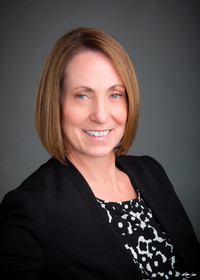
“I grew up around healthcare,” Divine said.
As the daughter of a pediatrician in Albuquerque, Divine spent summers working in her father’s office, gaining an early appreciation for the people, purpose and teamwork behind delivering health care. Still, when she went to college and earned a degree in mathematics, she wasn’t immediately sure where that path would lead.
She soon found her answer.
“I remember thinking, ‘What can I do with a math degree?’” Divine recalled with a laugh. “The more I thought about it, the more I realized health care was where I wanted to be. It combined problem-solving with something that truly makes a difference in people’s lives.”
Divine began her career in entry-level health care positions and gradually took on roles in quality assurance and operations. After returning to New Mexico, getting married and starting a family, she realized she needed a stronger business foundation to continue growing as a leader.
“I knew I wanted to broaden my perspective and better understand the business side of health care,” she said. “That’s what made the Executive MBA program so appealing.”
The Executive MBA program at The University of New Mexico’s James and Gail Ellis School of Business Leadership, formerly the Anderson School of Management, allowed Divine to continue advancing her career while balancing family responsibilities. Just as valuable was the opportunity to learn alongside and from experienced professionals.
“The faculty and guest speakers brought real-world experience into every discussion,” Divine said. “It wasn’t just theory. We were learning from people who had faced the same challenges we would encounter as leaders.”
She credits the program with helping her develop the broader perspective needed to lead increasingly complex operations and organizations.
“The program helped me think beyond the role I was in at the time,” she said. “It gave me a much broader understanding of how an organization works and how decisions in one area affect every other part of it. That perspective has been invaluable as I’ve taken on larger leadership responsibilities.”
Today, Divine serves as chief executive officer of TriCore, one of New Mexico’s leading clinical laboratories. As CEO, she believes effective leadership begins with remembering the purpose behind the work.
“At the end of the day, health care is about people,” she said. “No matter what role we’re in, we’re all here for the patient. When you keep that at the center of every decision, it becomes much easier to stay grounded in what matters most.”
Throughout her career, Divine has benefited from mentors, leaders and executive coaches who encouraged her to take on opportunities that stretched her capabilities. Today, she is intentional about providing that same support to others, including students who are interested in health care leadership.
One of the defining moments in her career came during a major initiative to transition patient records to an electronic system.
As leaders discussed who should take on the project, someone looked at Divine and asked a simple question:
“Why don’t you?”
“That moment stayed with me,” Divine said. “Sometimes the only thing standing between us and the next opportunity is our own hesitation. Having someone believe in me and encourage me to step forward changed how I saw myself and what I thought was possible.”
The experience gave Divine exposure to the broader challenges of leading organizational change. It required balancing operational, financial and clinical considerations while bringing together professionals with different expertise and perspectives.
“It reinforced for me that the best solutions rarely come from one person,” she said. “They come from bringing together people with different perspectives, experiences and expertise who are committed to solving the problem.”
Looking ahead, Divine sees technologies such as artificial intelligence creating opportunities to improve efficiency, strengthen decision-making and help address workforce shortages across health care.
“Technology will continue to change how we work,” she said. “The opportunity is using those tools thoughtfully so we can spend more time focused on the things that matter most, including patients and the people delivering care.”
Ultimately, Divine measures success by the impact an organization has on both its patients and its employees.
“If we can make a positive difference for patients while creating an environment where people are able to grow and thrive, that’s success,” she said. “The two go hand in hand.”
Helping others develop is one of the most rewarding aspects of leadership for Divine.
“One of the most rewarding parts of leadership is helping people see potential in themselves that they may not yet see,” she said. “Helping someone grow into a new role or achieve something they once thought was beyond their reach is incredibly meaningful.”
That philosophy reflects the support Divine received throughout her own career and the individuals who encouraged her to pursue opportunities she may not have chosen for herself.
And despite the responsibilities that come with leading a health care organization, Divine still credits those early experiences in her father’s office for shaping her perspective.
“Those experiences taught me that every role matters,” she said. “Whether you’re filing records, caring for patients or leading an organization, each person contributes to the outcome. Those early lessons, combined with my education at Anderson, shaped the leader I am today.”
Her career has taken her from summer jobs in her father’s pediatric office to the CEO’s office at TriCore. Along the way, one question changed the trajectory of her career.
Now, she hopes to be the person asking it of someone else:
Why not you?